You moved into your King County home five, ten, maybe fifteen years ago. The roof was the seller’s responsibility back then. Now you’re wondering: how much time is left on it, and when does “fine” turn into “leaking through the kitchen ceiling on a Tuesday in November”?
The honest answer depends on what’s up there, when it was installed, and how the Pacific Northwest has treated it. A 20-year-old asphalt shingle roof in Phoenix has a different remaining life than a 20-year-old asphalt shingle roof in Bellevue. PNW weather shortens almost every material’s lifespan from the manufacturer spec.
This guide gives you the real numbers for King County roofs, the climate factors that drive them, and the signs that say your roof is closer to replacement than you think.
The short answer for Pacific Northwest roofs
Here is the short answer: in the Pacific Northwest, an architectural asphalt shingle roof realistically lasts 18 to 22 years, a few years less than the national average, because of constant moisture, moss, and shade. Metal lasts 40 to 50 years, cedar shake 20 to 30 with heavy maintenance. Where your roof falls inside those ranges depends mostly on ventilation, tree cover, and whether moss was controlled. The full breakdown is below.
| Roofing material | Realistic King County lifespan |
|---|---|
| 3-tab asphalt shingles | 15 to 18 years |
| Architectural asphalt shingles | 18 to 22 years |
| Premium / designer asphalt | 22 to 28 years |
| Cedar shake | 20 to 30 years (with maintenance) |
| Standing seam metal | 40 to 50 years |
| TPO / flat membrane | 20 to 25 years |
Here’s what we actually see in King County, broken down by material:
- 3-tab asphalt shingles: 15 to 20 years (often closer to 15)
- Architectural asphalt shingles (Timberline HDZ and similar): 22 to 30 years
- Premium asphalt (designer / Class 4 impact): 28 to 35 years
- Cedar shake: 25 to 30 years with treatment, 15 to 20 untreated
- Standing seam metal: 40 to 70 years
- Concrete or clay tile: 40 to 60 years
- Flat / TPO: 20 to 25 years
These ranges assume the roof was installed correctly with proper ventilation and underlayment. A poorly installed roof loses 5 to 10 years off any of these numbers, regardless of material.
Why the Pacific Northwest shortens roof life
Manufacturers test shingles in controlled labs. They don’t test them in King County. Five things are eating at your roof year-round:
Constant moisture. Seattle and the Eastside average 37 to 40 inches of rain per year, with the bulk falling between October and May. Asphalt shingles absorb moisture, expand and contract with temperature swings, and lose granules faster than they would in a dry climate.
Heavy tree canopy. Most King County homes sit under cedars, firs, and big-leaf maples. Shade keeps roofs damp for days after rain stops. Damp roofs grow moss. Moss lifts shingle edges, holds water against the asphalt, and accelerates granule loss.
Freeze-thaw cycles. At higher elevations like Sammamish Plateau, Cougar Ridge, and parts of Newcastle, freezing nights are common from December through February. Water absorbed during the day freezes overnight inside shingle cracks, expands, and pries the shingle further apart. Each cycle widens the failure.
Algae and lichen. Black streaks on a north-facing slope are Gloeocapsa magma algae feeding on the limestone filler in asphalt shingles. Lichen grows on the southwest slopes that dry between rains. Both shorten shingle life by several years if untreated.
Wind events. Fall and winter storms regularly push 30 to 50 mph wind through the Eastside. Each storm lifts shingles, breaks ridge cap seals, and pries flashing. After ten or fifteen years, the cumulative damage matters.
Lifespan by material — the real numbers for King County
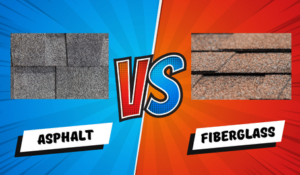
Asphalt shingles (3-tab vs architectural vs designer)
3-tab is the oldest and cheapest profile. If your roof was installed before 2005 and looks like flat overlapping rectangles, it’s 3-tab. Spec life is 20 to 25 years; in PNW you should expect 15 to 18 in practice. Most King County homes with 3-tab now are past or near the end.
Architectural (sometimes called dimensional or laminated) has been standard since the early 2000s. The thicker profile with dimensional shadow lines is more wind-resistant and lasts longer. GAF Timberline HDZ, Owens Corning Duration, and CertainTeed Landmark are typical examples. Real-world PNW life: 22 to 28 years if installed correctly with proper ventilation.
Designer shingles (Grand Sequoia, Camelot, Slateline) are heavier, often impact-rated, and built for premium homes. 28 to 35 years is realistic. If you’re considering one of these, the math works for homeowners staying 20+ years.
For the full breakdown on which material fits your situation, see our metal roof vs asphalt shingles guide.
Metal roofing
Standing seam metal handles PNW conditions better than anything else asphalt-based. Moss doesn’t grip onto smooth metal panels the way it grips onto shingle texture. Wind ratings are stronger. Snow sheds cleanly.
Realistic life: 40 to 70 years depending on gauge and coating. 24-gauge with a Kynar 500 finish is the standard upper end. Metal costs 1.5x to 2x asphalt upfront, but the lifecycle math favors metal for homeowners staying long-term.
Cedar shake
Cedar shake roofs were the default on premium PNW homes from the 1970s through the 1990s. They’re aesthetically beautiful but climate-vulnerable. Treated and maintained every 3 to 5 years, cedar lasts 25 to 30 years. Neglected, it fails at 15 to 20.
Most cedar shake roofs in King County today are between 25 and 40 years old. If yours hasn’t been treated, it’s likely at or past the end. Conversion to architectural shingle or metal is the typical replacement path.
Concrete and clay tile
Rare in King County (more common in California), but where present they last 40 to 60 years. The underlayment underneath fails first, often before the tiles themselves, so re-roofing every 25 to 30 years involves removing and reinstalling the tiles.
Signs your King County roof is approaching end of life
You don’t need a ladder for most of these. A walk around the house tells you a lot:
1. Granules in the gutters. Asphalt shingles lose granules over their life. A handful is normal in year five. A bucket’s worth in year fifteen means the protective layer is gone. 2. Curling or cupping shingles. Edges lift away from the roof, especially on the south and west slopes. Caused by age, heat cycling, and moisture. 3. Missing shingles after a windstorm. Once shingles are lifted, the next storm finishes them. Aging adhesive can’t reseal. 4. Visible moss or algae streaks. Surface treatment can buy time on a 10-year-old roof. On a 20-year-old roof, the underlying damage is usually significant. 5. Sagging rooflines. Visible dips or waves mean the decking underneath is rotted or the trusses are stressed. This is structural, not cosmetic. 6. Daylight in the attic. Climb into the attic on a sunny day. Daylight through the roof boards means active failures. 7. Water staining on the ceiling. Active leaks are obviously the end-stage signal, but stains from past leaks suggest the roof has been compromised for a while.
If you’re seeing two or more of these, the roof is probably in the last 3 to 5 years of its life. See our warning signs guide for more detail on what each symptom actually means.
What you can do to extend the roof you have
Most roofs that fail early in PNW fail because of moss, ventilation, or both. Three things help:
Annual moss treatment. Zinc strips along the ridge slow regrowth between cleanings. Soft-wash treatment every 2 to 3 years on shaded slopes prevents the lifting that kills shingles.
Proper attic ventilation. Heat trapped in the attic cooks the underside of shingles. Ridge vents plus soffit vents are the standard PNW upgrade. Most homes built before 2000 are under-ventilated.
Gutter cleaning twice a year. Clogged gutters back water up under shingles at the eaves, where ice and water shield should be doing its job. Fall and spring cleanings are the minimum.
These won’t add 10 years to a roof at the end of its life, but they will keep a healthy 12-year-old roof on track for 25 instead of 18.
Repair vs replace — how to decide
A leak doesn’t always mean replacement. Three rules:
- Roof under 15 years old with a localized failure (one valley, one flashing): repair almost always wins.
- Roof 15 to 20 years old with multiple repairs already, or deck rot found during repair: budget for replacement in the next 3 to 5 years.
- Roof 20+ years old with visible granule loss, curling, and active leaks: replacement.
For the full decision framework, see our roof repair vs full replacement guide which walks through cost comparison, contractor red flags, and how to time the project.
Frequently asked questions
Does paying for moss treatment actually extend roof life? Yes, on roofs that still have good shingle integrity. On a 5-to-15-year-old roof, regular treatment plus zinc strips can add 3 to 7 years of useful life. On a 20+ year-old roof, treatment delays the inevitable but doesn’t reverse existing damage.
Is metal roofing really worth the higher upfront cost? For homeowners staying in the home 20+ years, yes. The lifecycle math works out, plus moss doesn’t grip metal the way it grips asphalt. For homeowners selling in 5 years, the resale uplift doesn’t fully cover the premium.
My roof is 18 years old and looks fine. Should I replace it preemptively? Probably not. Schedule a free inspection. If the inspection finds visible granule loss, curling, or deck issues, plan replacement in the next 2 to 3 years. If it looks genuinely healthy, you might get another 5 to 8 years out of it.
What’s the average cost to replace a roof in King County? $11,000 to $30,000 depending on size, material, and complexity. See our full King County cost guide for material-by-material breakdowns.
Does homeowners insurance cover roof age? No. Insurance covers sudden events (storm, fallen tree, hail) but not deterioration from age. Roofs 20+ years old sometimes get insurance pushback on coverage. Replacing before the carrier flags it is the cleaner path.
Schedule a free roof assessment in King County
If your roof is over 15 years old, the wind has been busy this season, or you’ve seen any of the warning signs above, schedule a free inspection. We’ll walk the roof, document everything with photos, and give you an honest read on how much life is left and what to plan for.
Prosperity Roofing serves Bellevue, Renton, Kirkland, Kent, Sammamish, Redmond, Issaquah, Auburn, Bothell, Federal Way, and the rest of King County. Licensed, bonded, and insured in Washington State.
Call (425) 588-1990 or request your free estimate online.
—
GMB Post
Headline: How Long Does a King County Roof Actually Last?
Body (~290 chars):
Manufacturers say 30 years. Pacific Northwest weather says less. Real King County numbers: 3-tab asphalt 15-18 yrs, architectural 22-28, metal 40-70, cedar 25-30 with treatment. Constant moisture, tree canopy, freeze-thaw, and moss cut years off every material. Free inspection: (425) 588-1990.
CTA: Learn more Link: https://prosperityroofing.com/how-long-does-a-roof-last-pacific-northwest-king-county-guide/ Photo suggestion: Aged asphalt roof with visible granule loss + moss on a north-facing slope, PNW evergreens in background. Photorealistic documentary style. Alt: “aged asphalt roof showing granule loss and moss in King County WA”
—