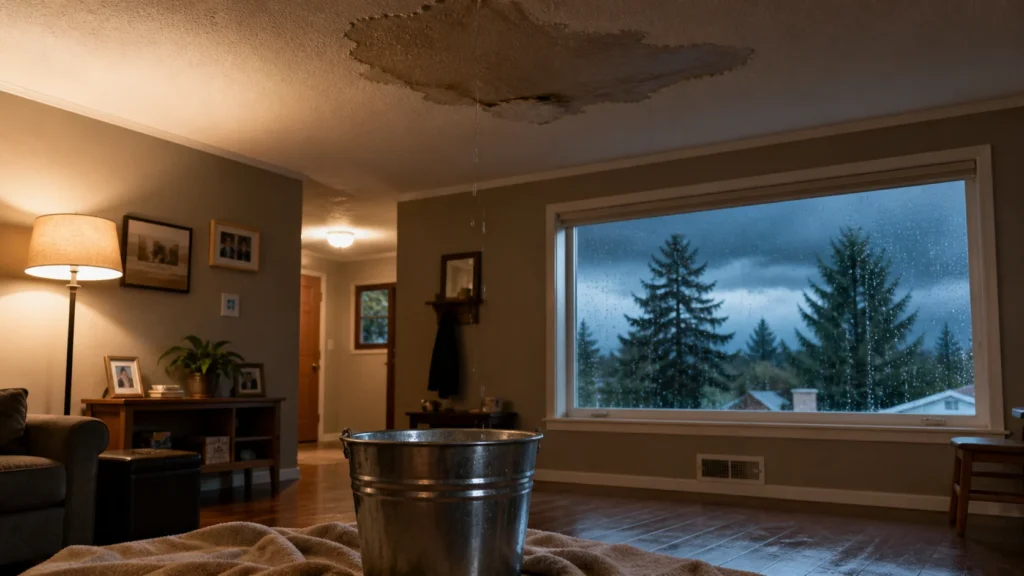
A roof leak in King County doesn’t announce itself at a convenient time. It’s a November night during a wind-driven rainstorm, or a Sunday morning when water suddenly starts dripping through your ceiling.
What you do in the first few hours matters. The difference between a manageable repair and thousands of dollars in secondary damage (soaked insulation, rotted framing, mold) often comes down to how quickly and correctly you respond.
This guide walks through exactly what to do when your roof is actively leaking, what temporary measures actually help, and when to call a professional.
Step 1: Protect what’s inside your home first
Before you go anywhere near the roof, address what’s happening inside.
Move belongings away from the leak. Furniture, electronics, rugs, and anything irreplaceable should be moved immediately. Water travels along surfaces before it drips. The visible drip point is rarely directly above where the water is actually entering.
Place containers to catch water. Use buckets, pots, or trash cans under active drips. If water is pooling on a ceiling and the ceiling is bulging, carefully puncture the lowest point to let water drain in a controlled way rather than risking a ceiling collapse.
Protect flooring. Lay down towels or plastic sheeting under the affected area to minimize water damage to hardwood, carpet, or subfloor.
Document everything. Take photos and video of the interior damage (ceiling staining, water intrusion location, affected belongings). This documentation matters if you file an insurance claim later.
Step 2: Locate the leak source (carefully)
Leaks are deceptive. The visible drip point on your ceiling is rarely where the water is entering the roof. Water follows the path of least resistance: it enters through a breach in the roof and travels along rafters, sheathing, or insulation before appearing on your ceiling.
Check the attic first. If you have attic access, go in with a flashlight and look for:
- Visible daylight through the roof sheathing
- Water staining or wet spots on rafters and decking
- Wet insulation
- The path of water tracking toward the drip point
Tracing the water path in the attic is far safer than walking on a wet roof and will usually reveal more useful information.
Common leak locations in King County homes:
- Flashing around chimneys, skylights, and vents (the most common source)
- Valleys where two roof slopes meet
- Ridge line and ridge cap
- Gutters and eaves: if gutters are overflowing, water can back up under shingles
- Areas with heavy moss growth (moss lifts shingle edges, creating entry points)
Step 3: Temporary measures to stop immediate water intrusion
These are temporary stabilization measures, not repairs. Their purpose is to stop additional water from entering your home until a professional can make the permanent fix.
Tarping
The most effective emergency measure is a properly installed roof tarp. A tarp covering the affected area and extending over the ridge reduces additional water infiltration significantly.
Important: Getting on a wet, sloped roof during or immediately after a storm is dangerous. If it’s actively raining, high wind, or if the roof pitch is steep, do not attempt to tarp it yourself. Wait for conditions to improve, or call an emergency roofing service.
If you do tarp:
- Use a minimum 6-mil polyethylene tarp
- Extend the tarp from the ridge down past the eave. It must cover the full section, not just the visible damage
- Weight or secure the edges so wind doesn’t catch it
Roof patch tape / sealant (minor leaks only)
For a known, accessible small breach (a cracked shingle, a separated flashing edge), roofing tape or a self-sealing membrane patch can provide temporary relief. These are available at hardware stores and are not a permanent solution, but they can stop an active drip while you schedule a repair.
What NOT to do
- Don’t use caulk alone on flashing gaps. Caulk fails quickly under the thermal cycling of a Washington State roof.
- Don’t attempt temporary repairs in wind or lightning.
- Don’t ignore it. A “slow drip” can saturate insulation and create mold conditions within 24–48 hours.
Step 4: Call a roofing contractor for emergency assessment
Once you’ve stabilized the interior situation and taken documentation photos, contact a licensed roofing contractor. In King County, most established roofing companies have emergency service lines or can schedule urgent inspections quickly.
What to tell them:
- When the leak started and whether it’s active
- Where you see water intrusion (ceiling location, attic observations)
- Whether you’ve had any recent weather events (wind, heavy rain)
- Whether the roof is older or has had prior repairs
A contractor will inspect the roof, identify the actual source of the leak (which may be different from where the water appears inside), and give you a diagnosis and repair scope.
Step 5: Assess the scope — repair or replacement?
Emergency repairs address the immediate leak. But an emergency inspection is also an opportunity to understand what the leak is telling you about the roof’s overall condition.
A leak in a specific, identifiable location (failed flashing, one damaged section) is typically a repair. A leak that reveals widespread shingle deterioration, rotted decking, or multiple infiltration points is often the first visible sign of a roof approaching end of life.
An honest contractor will tell you which situation you’re in. For the framework on this decision, see our repair vs. replacement guide for King County homeowners.
What secondary damage to watch for
A roof leak that goes unaddressed, or that was larger than it appeared, can cause secondary damage that exceeds the roof repair cost:
- Mold. Mold growth can begin within 24–48 hours of moisture exposure in wall cavities, insulation, and framing. Mold remediation in King County typically costs $1,500–$6,000+ depending on extent.
- Insulation saturation. Wet insulation loses its R-value and, if not dried or replaced, becomes a sustained moisture source. Blown-in attic insulation may require full replacement.
- Structural wood damage. Prolonged moisture exposure rots rafters and sheathing. Structural repairs add significantly to the repair cost.
- Ceiling and drywall. Water-stained ceilings often require drywall replacement after the leak is fixed. Document damage before repairs for insurance purposes.
When to file an insurance claim
If the leak was caused by a sudden storm event (high wind, falling trees, hail), it’s worth contacting your homeowner’s insurance company. Washington State insurers must acknowledge your claim within 10 business days.
Key points for King County homeowners:
- Document damage with photos and video before any temporary repairs
- Keep receipts for any emergency materials (tarps, etc.)
- Request a written repair estimate from your contractor before the adjuster visit, and consider having your contractor present during the adjuster’s inspection
- Insurance generally covers sudden events, not deterioration from age or lack of maintenance
If the leak was the first visible sign of a much older roof failing, see our warning signs guide for what else to look for before the rain season.
Frequently asked questions
How fast can a roofer respond in King County?
Most roofing contractors in the area can provide same-day or next-day emergency assessments. During severe storm seasons (late fall, winter), demand can push timelines out, which is why calling immediately matters.
Is a roof leak covered by homeowners insurance?
It depends on the cause. Sudden storm damage is typically covered. Leaks from age, wear, or deferred maintenance typically are not. Documenting the weather event and the damage timeline is important.
Can I stay in my home during an active leak?
If the leak is minor and contained, most homeowners can remain in place with precautions. If the leak is significant, ceiling structures are compromised, or mold is suspected, consult a water damage restoration company about whether temporary relocation is warranted.
How much does emergency roof repair cost in King County?
Emergency repairs (targeted patching, flashing fixes, tarp installation) typically run $250–$1,500 depending on scope and access. More significant repairs discovered during the assessment are quoted separately.
Prosperity Roofing — King County emergency roof repair
If your King County roof is actively leaking or was damaged in a storm, call Prosperity Roofing. We serve all of King County: Bellevue, Renton, Kirkland, Kent, Auburn, Sammamish, Redmond, Issaquah, Bothell, Federal Way, and surrounding areas.
Call (425) 448-5556 for urgent roof situations, or submit a service request online and we’ll be in touch as quickly as possible.
Prosperity Roofing is a licensed roofing contractor serving King County, WA. We specialize in roof repair, full replacements, and metal roofing for residential homeowners.